Heavy Lift Logistics Egypt cargo refers to freight that is exceptionally heavy, oversized, or difficult to transport using standard shipping equipment. These shipments often require specialized cranes, lifting systems, transport vehicles, and carefully engineered logistics plans. Three related terms that are often used interchangeably but have distinct meanings in the logistics industry: Heavy lift cargo …

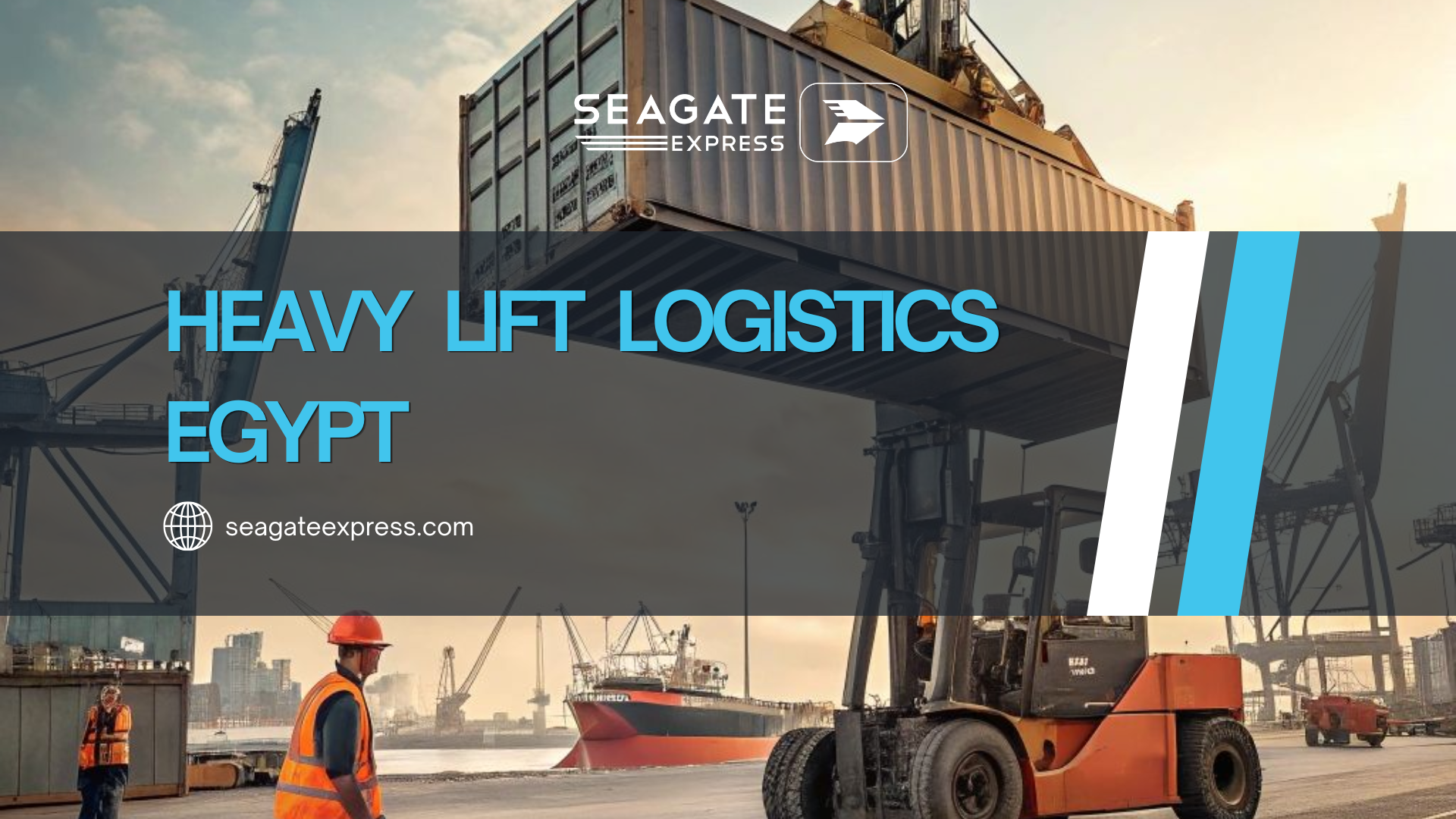
Heavy Lift Logistics Egypt cargo refers to freight that is exceptionally heavy, oversized, or difficult to transport using standard shipping equipment. These shipments often require specialized cranes, lifting systems, transport vehicles, and carefully engineered logistics plans.
Three related terms that are often used interchangeably but have distinct meanings in the logistics industry:
Heavy lift cargo
refers specifically to the transportation of an exceptionally heavy or oversized individual piece of freight — a single transformer, a reactor vessel, or a large crane component. The defining characteristic is the individual item’s weight or size relative to what standard equipment can handle.
Out of Gauge (OOG) cargo
refers to cargo that exceeds the standard internal dimensions of a shipping container — too tall, too wide, or too long to fit inside a standard 20GP or 40HC — but which may not necessarily be extremely heavy. OOG cargo requires open-top containers, flat-rack containers, or breakbulk shipping depending on the degree of oversizing.
Project cargo
is the broader concept of coordinating the movement of multiple heavy lift and OOG shipments as part of a single large-scale project — a wind farm installation, a petrochemical plant construction, or a power station build — where dozens or hundreds of individual cargo movements must be sequenced, tracked, and delivered to the project site in a specific order to meet installation timelines. For a full overview of project cargo logistics in Egypt, see our project cargo Egypt guide.
Request a Freight Consultation
Which Egyptian Industries Drive Heavy Lift Logistics Demand?
Egypt’s heavy lift logistics market is driven by four major industry sectors — renewable energy, oil and gas, power generation, and infrastructure — each of which requires specialized transport of large, heavy, or technically complex components that cannot be moved by conventional freight methods.
Renewable Energy
is the fastest-growing driver of heavy lift demand in Egypt. Egypt’s ambitious wind energy program along the Gulf of Suez and in the Western Desert requires the transport of wind turbine towers, nacelles (which can weigh 80 to 120 tons each), and blade sets (which extend 50 to 80 meters in length) from ports of entry to remote installation sites. The Dabaa Nuclear Power Plant on Egypt’s Mediterranean coast is one of the largest active nuclear construction projects globally, requiring the transport of reactor vessels, steam generators, and specialized equipment components weighing hundreds of tons from European and Russian manufacturing facilities to the Egyptian site. Solar panel installation programs across Upper Egypt also generate heavy lift demand for transformer stations and electrical substation equipment.
Oil and Gas
generates consistent heavy lift logistics demand for drilling platforms, refinery columns, heat exchangers, and storage tanks serving Egypt’s Red Sea, Nile Delta, and Western Desert production zones. These components routinely exceed 100 tons per piece and require precision delivery to operating facilities where installation windows are measured in hours rather than days.
Power Generation and Grid Infrastructure
Egypt’s electricity network expansion and the New Administrative Capital’s infrastructure build have created sustained demand for heavy lift transport of power transformers, large generators, and high-voltage substation equipment, all of which require specialized low-bed transport, crane support at the delivery site, and road permits for oversize loads.
Government and Private Infrastructure
The customers of heavy lift services in Egypt are typically found in various sectors: government, private infrastructure projects, oil and gas production, and power plants. Large construction projects — tunnels, bridges, high-rise buildings, and port facilities — generate demand for construction cranes, precast concrete sections, and structural steel components that require heavy lift logistics coordination.
What Equipment Is Used for Heavy Lift Transport in Egypt?
Heavy lift logistics in Egypt uses a combination of specialized land transport equipment, lifting machinery, sea vessels, and in some cases heavy lift aircraft — with the specific equipment configuration determined by the cargo dimensions, weight, delivery site conditions, and the road and port infrastructure along the route.
Specialized Trailers (Modular, Low-Bed, SPMT)
Low-bed trailers are the standard inland transport platform for heavy lift cargo, offering a lowered deck that maximizes the available height clearance for tall cargo under bridges and power lines. Self-Propelled Modular Transporters (SPMTs) are electronically controlled platforms that can be configured in multiple combinations to distribute the weight of extremely heavy loads — a single SPMT line can carry 30 to 40 tons, and multiple lines can be linked to carry hundreds of tons with computer-controlled hydraulic leveling that keeps the load stable even on uneven terrain. For cargo that exceeds even SPMT capacity or requires transport to sites with no road access, crawler-mounted transport systems are deployed. Egypt has made substantial investments in infrastructure, enhancing ports, roads, and logistics hubs to facilitate project cargo movement — though challenges remain in last-mile connectivity and heavy lift transport routes to remote project sites.
Heavy Lift Cranes and Rigging Equipment
Ground-based heavy lift cranes are required at loading and delivery points to lift oversized cargo from the transport platform onto the installation foundation or vessel deck. Mobile cranes (typically 100 to 1,000 tons capacity), crawler cranes (up to 5,000 tons capacity for the largest installations), and strand jacks are the primary lifting tools in Egyptian heavy lift operations. Rigging engineering — the calculation of lift points, sling angles, shackle loads, and crane positioning — is a critical safety and liability element that must be performed by certified engineers before any lift, not improvised on site.
Breakbulk and Heavy Lift Vessels
Cargo too large or too heavy for standard container ships is transported by breakbulk vessels — general cargo ships with heavy-lift derricks capable of lifting 100 to 300 tons directly from the quayside — or by specialized semi-submersible heavy lift vessels that submerge their deck to float cargo on and off. Ocean suits large volumes via breakbulk, flat racks, or heavy-lift vessels, which are cost-effective for non-urgent shipments. Alexandria Port and Sokhna Port are Egypt’s primary entry points for breakbulk and heavy lift sea cargo, with heavy lift cranes capable of handling the largest single-piece loads arriving from European or Asian manufacturing facilities. For current sea freight rate benchmarks that apply to heavy lift and project cargo ocean movements, see our ocean freight rates Egypt guide.
Heavy Lift Aircraft (Antonov An-124)
For time-critical heavy lift components that cannot wait for a sea voyage — engine replacements for power plants, emergency spare parts for refineries, or components needed to avoid costly operational downtime — heavy lift aircraft like the Antonov An-124-100 provide air transport for outsized cargo up to 120 tons and dimensions that standard freighter aircraft cannot accommodate. Air offers speed for time-sensitive items, using heavy-lift planes like the Antonov An-124 — ideal for engines needing quick delivery. This option is significantly more expensive than sea freight but is operationally justified when the cost of plant downtime exceeds the freight premium.
Request a Freight Consultation
How Does the Heavy Lift Logistics Process Work in Egypt?
Heavy lift logistics in Egypt follows a four-stage process that must be completed in sequence, with each stage building on the outputs of the previous one — skipping or compressing any stage increases the risk of equipment failure, permit violations, or site delivery failure that can halt an entire project. Moving oversized loads requires a focused and meticulous approach in several stages.
Stage 1 — Engineering Assessment and Route Survey
First, a detailed project feasibility study is carried out. Road surveys, traffic authorizations: nothing is left to chance. The engineering assessment establishes the cargo’s exact weight, center of gravity, lifting points, and dimensional envelope, then identifies the transport configuration — trailer type, number of axles, crane positions at origin and destination. The route survey physically inspects every segment of the intended transport path for bridge load ratings, overhead clearance (power lines, bridges, road signs), road width constraints, turning radius limitations, and ground bearing capacity at loading and delivery points.
Stage 2 — Permits and Regulatory Approvals
Permit and regulatory compliance involves managing all permit applications for oversized and overweight transport, including road transport permits, port access permits, and environmental clearances as required. In Egypt, road transport permits for oversized cargo are issued by the Egyptian Road Authority, and port access permits require coordination with the Egyptian Ports Authority and the relevant terminal operator. While Egypt’s approval processes are often faster than Europe’s, especially for projects of national significance like renewable energy, bureaucratic delays can still occur, particularly for oversized cargo and specialized transport. Permit processing timelines vary significantly by cargo size and route complexity — simple permits may take days, while cross-governorate routes for extremely large loads can take weeks.
Stage 3 — Equipment Mobilization
Based on the engineering assessment, the appropriate heavy lift equipment is mobilized — including trailers, cranes, rigging gear, and support vehicles — well in advance of the scheduled move date. Equipment mobilization in Egypt is complicated by the limited national fleet of specialized heavy lift transport units, which means advance booking of equipment (particularly SPMTs and large crawler cranes) is essential for major project cargo moves. Last-minute equipment sourcing in Egypt typically results in either significantly higher costs or schedule delays that cascade across the project installation timeline.
Stage 4 — Execution and Real-Time Monitoring
During the actual transport, the operations center maintains real-time communication with the convoy, monitoring progress, weather conditions, and any emerging challenges to ensure timely and safe delivery. Heavy lift convoys on Egyptian roads typically travel during nighttime or early morning hours to minimize disruption to normal traffic and to take advantage of lower ambient temperatures in summer months that reduce road surface stress from the convoy’s extreme axle loads. Police escorts are standard for most Egyptian heavy lift road movements, coordinated by the logistics provider in advance with the relevant traffic authority.
What Are the Main Challenges of Heavy Lift Logistics in Egypt?
The past year has presented a complex landscape for project logistics in Egypt, marked by supply chain disruptions, inflationary pressures, and fluctuating fuel prices. Beyond the global context, Egypt’s heavy lift sector faces four specific structural challenges in 2026.
Limited specialized equipment fleet.
The increasing demand for heavy lift solutions requires continuous fleet expansion to meet the growing needs of various industries. The national fleet of SPMTs, large crawler cranes, and semi-submersible vessels available in Egypt is smaller than the demand generated by the country’s active infrastructure and energy pipeline, creating booking competition that drives up both cost and lead times for major project cargo moves.
Skilled driver and operator shortage.
There is an increasing need for skilled, certified drivers for specialized heavy lift transport, making training and workforce development a key priority. Operating an SPMT convoy or a large crawler crane requires certification and experience that is currently in short supply relative to Egypt’s project pipeline, and the shortage of qualified personnel is a practical constraint on how many large heavy lift operations can run simultaneously.
Last-mile connectivity to remote project sites.
While Egypt’s port infrastructure has improved significantly, the road network connecting ports to remote renewable energy sites in the Western Desert, Upper Egypt, and the Gulf of Suez corridor is less developed than the main trunk roads. Challenges remain in last-mile connectivity and heavy lift transport routes that require purpose-built access roads or temporary road reinforcement as part of the project logistics plan.
Customs and port congestion during peak season.
For imported heavy lift components arriving by sea, port congestion at Alexandria during the peak export season creates delays in vessel berthing and crane allocation that add days to project schedules. For a full picture of the customs procedures that apply to heavy lift and project cargo imports at Egyptian ports, see our customs clearance procedures in Egyptian ports guide. Heavy lift cargo moving from Egypt to Gulf destinations by road faces similar checkpoint and coordination challenges covered in our overland transport companies Egypt GCC guide.
Egyptian Port Capabilities for Heavy Lift Cargo
Egypt’s four main commercial ports offer different levels of heavy lift capability that affect which port is appropriate for specific cargo sizes and weight categories.
Alexandria Port
has heavy lift cranes capable of handling loads up to several hundred tons at designated heavy lift berths, and is the most commonly used port for project cargo arriving from European and Mediterranean suppliers. Its established relationships with breakbulk carriers and heavy lift vessel operators make it the default first choice for most project cargo managers.
Ain Sokhna (Sokhna) Port
on the Red Sea is increasingly used for project cargo destined for Upper Egypt, the Gulf of Suez energy corridor, and Red Sea-adjacent sites, where its geographic position reduces inland transport distance compared to routing through Alexandria. Sokhna has invested in heavy lift capacity to serve the growing energy sector project pipeline.
Damietta Port
handles some heavy lift cargo for projects in the northeastern Nile Delta region but has more limited specialized heavy lift crane capacity than Alexandria or Sokhna.
Port Said
is primarily a container and transshipment hub rather than a heavy lift port, though it handles some breakbulk traffic for projects near the canal zone. For general container shipping context across all Egyptian ports, our container shipping Egypt guide covers port selection criteria in detail.
Heavy Lift Documentation and Customs in Egypt
Heavy lift and project cargo imports in Egypt require the same core documentation as standard commercial imports — commercial invoice showing CIF value, packing list, bill of lading, and certificate of origin — plus additional documentation specific to oversized and heavy cargo: dimensional survey reports, weight certificates, and engineering specifications that customs may require to verify the declared value and HS code classification of complex equipment.
For project cargo imports subject to Egyptian government incentives or special economic zone benefits, additional documentation confirming project registration and approval is required before customs will apply any preferential duty treatment. Working with a customs clearance agent experienced in project cargo imports — not just standard commercial goods — is essential, since the HS code classification of complex machinery and the applicable duty rate can vary significantly depending on how the equipment is categorized and whether it qualifies for reduced duty as capital goods.
For a full checklist of required documents by cargo type, see our documents required for customs clearance in Egypt guide, and for a breakdown of how duties and VAT are calculated on high-value capital equipment imports, see our customs clearance cost Egypt guide. Seagate’s custom clearance service provides port-resident brokers at Alexandria and Sokhna familiar with the project cargo documentation requirements.
Request a Freight Consultation
Do You Need Cargo Insurance for Heavy Lift Shipments?
Cargo insurance for heavy lift shipments is not just advisable — it is essential. The financial value of heavy lift cargo — transformers worth millions of dollars, nuclear reactor components, oil platform equipment — makes carrier liability caps completely inadequate as the only financial protection. A semi-submersible vessel incident or a crane failure during loading that damages a $5 million transformer would recover a fraction of that value under standard carrier liability conventions.
With maritime chokepoint closures and swift regulatory changes, project forwarders are required to manage a landscape where supply chain disruptions have become the standard rather than an exception — and the Red Sea security environment in 2025-2026 has added specific war risk exposure to Egypt-connected sea routes that standard cargo insurance policies may exclude unless a war risk extension is explicitly added. For a full overview of cargo insurance types, ICC coverage levels, and what heavy lift shipments specifically need in terms of coverage clauses and exclusion management, see our cargo insurance Egypt guide. For the specific marine insurance framework covering Egyptian sea freight, see our marine insurance Egypt cargo guide. Seagate’s marine insurance service covers specialized coverage for high-value project cargo and heavy lift shipments on Egyptian trade routes.
How to Choose the Right Heavy Lift Logistics Provider in Egypt
Choosing the right logistics partner for heavy lift operations is critical to project success. The right provider for heavy lift logistics in Egypt must demonstrate in-house engineering capability (not outsourced feasibility studies), ownership or confirmed access to the specific equipment required for your cargo, established relationships with Egyptian port authorities and road permit agencies, and a verifiable track record on comparable projects in Egypt — not just globally.
The five questions to ask any prospective heavy lift provider before signing a contract:
1. Do you own or have confirmed access to the SPMT and crane equipment required for this cargo?
Providers who say “we can source equipment” without confirmed reservations create scheduling risk at the most critical phase of the project. Equipment availability in Egypt’s active market must be confirmed, not assumed.
2. Can you provide the route survey report before project award?
A preliminary route survey demonstrates that the provider has physically inspected the intended transport path and identified real constraints — not just estimated them from a desk. Providers who offer route surveys only after contract signing cannot be held accountable for the constraints they discover too late.
3. What is your permit processing timeline for this specific route and cargo?
Processing times vary enormously by route complexity and cargo size. A provider who quotes unrealistic permit timelines is either inexperienced in the Egyptian permit process or is not accounting for real bureaucratic timelines.
4. How do you handle scope changes and unexpected obstacles during execution?
Heavy lift operations in Egypt frequently encounter unexpected road conditions, bridge load concerns, or weather delays. A provider’s crisis response protocol — not their standard operating procedure — determines whether a problem becomes a delay or a project failure.
5. What cargo insurance coverage do you recommend and can you arrange it as part of the contract?
A provider who recommends minimum coverage for a high-value shipment, or who cannot advise on War Risk extension for Red Sea-routed cargo, is not operating with your financial interests in mind.
For a broader overview of how to evaluate freight forwarders and logistics providers operating in the Egyptian market, see our guides on freight forwarder in Egypt and logistics companies in Egypt. Seagate’s project cargo service handles heavy lift and oversized cargo movements with in-house engineering capability, combined with ocean freight and overland freight services that cover the multimodal legs of complex project logistics operations.
Request a Freight Consultation
FAQ
What is heavy lift in logistics?
Heavy lift in logistics refers to the specialized transport of cargo that exceeds the weight, height, width, or length limits of standard shipping equipment — requiring engineered transport plans, purpose-built trailers, heavy cranes, route surveys, regulatory permits, and often multimodal coordination across road, sea, and sometimes air.
What types of cargo require heavy lift logistics in Egypt?
Common heavy lift cargo in Egypt includes wind turbine components (nacelles, towers, blades), power plant transformers, oil and gas refinery columns and heat exchangers, nuclear power plant reactor components, industrial cranes, large construction equipment, and prefabricated infrastructure modules.
How long does it take to plan a heavy lift operation in Egypt?
The planning timeline for a heavy lift operation in Egypt depends on cargo complexity, permit requirements, and equipment availability. Simple single-piece movements on established routes may require 4 to 8 weeks of planning. Complex multi-piece project cargo moves to remote sites, or movements requiring SPMT transport and port heavy lift coordination, typically require 3 to 6 months of advance planning.
What permits are required for heavy lift transport on Egyptian roads?
Oversized road transport in Egypt requires an oversize and overweight permit from the Egyptian Road Authority, traffic authority coordination for convoy scheduling and escort, and in some cases cross-governorate approvals for routes that pass through multiple administrative areas. Permits for loads above certain weight or dimension thresholds also require engineering certifications confirming road and bridge load capacity.
Can heavy lift cargo enter Egypt through any port?
No — not all Egyptian ports have the heavy lift crane capacity or breakbulk berths required for extremely large or heavy project cargo. Alexandria Port and Ain Sokhna Port are the primary entry points for heavy lift sea cargo, with the choice between them depending on the final delivery destination and the available vessel services from the origin port.
Does heavy lift cargo need specialized insurance?
Yes — standard cargo insurance policies may not adequately cover the specific risks of heavy lift operations, including lifting damage during crane operations, SPMT transport incidents, and weather-related damage during port handling. A project cargo-specific insurance policy or an All-Risk marine policy with explicit coverage for crane and SPMT operations provides appropriate protection for high-value heavy lift shipments.