If you import goods into Egypt, you've probably run into the term "e-invoicing" in two completely different contexts and mixed them up at least once. That's understandable. Egypt actually runs two separate e-invoicing-related systems that importers need to satisfy, and confusing them is one of the most common reasons shipments sit at the port longer …

If you import goods into Egypt, you’ve probably run into the term “e-invoicing” in two completely different contexts and mixed them up at least once. That’s understandable. Egypt actually runs two separate e-invoicing-related systems that importers need to satisfy, and confusing them is one of the most common reasons shipments sit at the port longer than they should. This article breaks down both systems clearly, as one piece of the wider Egypt customs and import compliance guide, so you know exactly what applies to your business and when.
What “E-Invoicing” Actually Means for Egyptian Importers
For an importer, “e-invoicing” can mean two different things: the Egyptian Tax Authority’s (ETA) e-invoice system for domestic tax reporting, or the structured commercial invoice required inside Nafeza’s Advance Cargo Information (ACI) submission for customs. They serve different purposes, sit with different authorities, and are not interchangeable.
The ETA system is about how your business reports sales and purchases for VAT and tax purposes inside Egypt. It applies to how you invoice your own customers and suppliers domestically. The Nafeza requirement, on the other hand, is about how the commercial invoice from your foreign supplier gets formatted and submitted so Egyptian Customs can process your shipment before it arrives. One is a tax-authority system; the other is a customs single-window system. Many importers assume that being compliant with one automatically satisfies the other it doesn’t, though (as covered below) the two do intersect at one specific point.
The ETA E-Invoice System: Egypt’s Domestic Tax Compliance Requirement
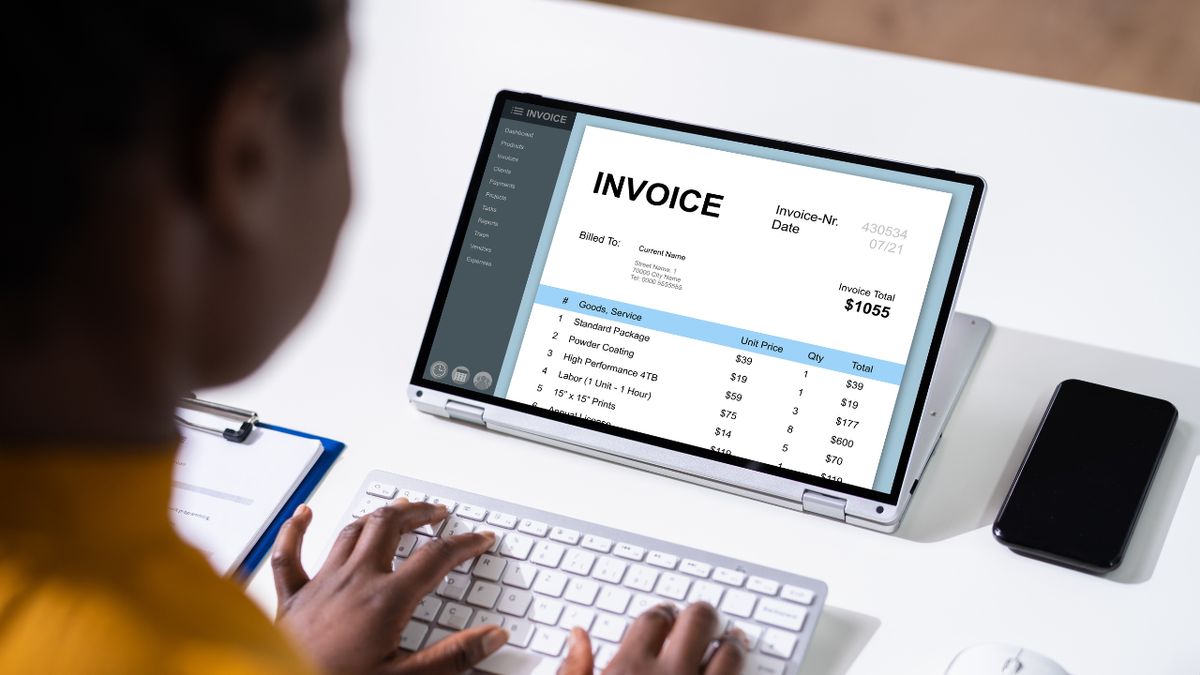
The ETA e-invoice system is Egypt’s mandatory electronic invoicing framework for VAT and tax reporting, run by the Egyptian Tax Authority. It requires registered businesses to issue structured, digitally signed invoices that are validated by ETA in real time paper invoices no longer count for tax purposes.
Egypt rolled this out in phases rather than all at once. The Egyptian Tax Authority began with its largest taxpayers from November 2020 and progressively brought in more businesses through 2021 and 2022. By 2023, virtually all VAT-registered businesses were required to issue e-invoices for business-to-business (B2B) transactions, and paper VAT invoices lost their validity for tax purposes. A parallel e-receipt system for business-to-consumer (B2C) sales started with a first group of roughly 150 large retailers in July 2022 and has since been extended to more sectors, with a further expansion from January 2025.
Who Must Register, and Since When
The scope keeps widening. Under Resolution No. 281 of 2025, Egypt’s Ministry of Finance lowered the mandatory e-invoicing and VAT registration threshold from EGP 500,000 to EGP 250,000 in annual revenue pulling many smaller importers and trading companies into scope for the first time. Businesses newly captured by this lower threshold were required to register with ETA by March 31, 2026, or face a lump-sum fine plus a daily penalty for continued delay. If your business imports goods and turns over more than EGP 250,000 a year, it’s worth confirming your ETA registration status directly rather than assuming you’re still under the radar.
Required Format and Fields
An ETA e-invoice must be issued in XML or JSON format, digitally signed by an ETA-approved provider, and submitted for real-time validation, after which ETA returns a unique UUID that acts as the invoice’s official reference number. Line items also need to carry standardized product codes either an international GS1 barcode (GTIN) or Egypt’s own EGS coding system for goods that don’t have a GS1 code. GS1 Egypt, which partners directly with the Tax Authority on this coding requirement, notes that every product listed on an e-invoice needs one of these two codes to be accepted.

Request a Freight Consultation
The Nafeza Structured Commercial Invoice: A Separate Customs Requirement
Inside Nafeza’s Advance Cargo Information system, the commercial invoice from your overseas supplier must be submitted as a structured document in Nafeza’s own Excel (XLS/XLSX) template or an equivalent XML format not as a scanned PDF. This sits entirely apart from the ETA tax e-invoice described above.
According to Nafeza’s own platform information, the ACI requirement started as a pilot on April 1, 2021, and became mandatory later that year for sea shipments. Rules and timing differ by transport mode, so if you’re shipping by air, it’s worth checking our dedicated guide to the Nafeza ACI mandate for air freight in Egypt for the mode-specific timeline. Whichever mode applies, the structured invoice must include the tax/VAT identification numbers for both the exporter and the importer, and its values, quantities, and HS classifications must match what you subsequently declare in Nafeza mismatches here are one of the most common causes of rejected filings. It sits alongside the packing list, bill of lading, and certificate of origin covered in our guide to the documents required for customs clearance in Egypt.
If your supplier only issues a standard PDF invoice, it needs to be converted into the structured Nafeza format before submission either manually against the official template or through an approved conversion tool. Submitting a PDF invoice where a structured file is required is a rejection waiting to happen.
How the ETA and Nafeza Systems Connect
Although they’re built for different purposes, the two systems aren’t entirely separate in practice. Since a Ministry of Finance decision effective July 1, 2023, importing and exporting companies have also needed to be registered in the ETA e-invoicing system and use GS1 or EGS product codes on their invoices as a precondition for accessing the Nafeza platform at all, according to a tax alert published by Deloitte Middle East. In other words, ETA registration became a gatekeeping requirement for Nafeza access even though the documents themselves (the ETA tax e-invoice and the Nafeza structured commercial invoice) remain distinct.
Practically, this means an importer whose ETA registration lapses or who hasn’t registered at all can find their Nafeza account effectively blocked, regardless of how correctly their supplier’s commercial invoice is formatted. Once your Advance Cargo Information filing is accepted, Nafeza issues the shipment its Advance Cargo Information identification number if you’re unfamiliar with what that number is and why customs asks for it at every step, our explainer on the ACID number in Egypt covers it in detail.
Common E-Invoicing Compliance Mistakes That Delay Clearance
Most e-invoicing delays at Egyptian ports trace back to a handful of recurring errors rather than anything exotic. Knowing them in advance is the easiest way to avoid a hold on your cargo.
- Treating the two systems as one. Assuming that having a valid ETA e-invoice automatically satisfies Nafeza’s structured commercial invoice requirement, or vice versa. They’re checked separately.
- Submitting a PDF where a structured file is required. Nafeza’s ACI envelope needs the Excel or XML template, not a scanned or exported PDF invoice.
- Mismatched values between documents. Invoice value, quantity, or product description that doesn’t match what’s declared in the ACI filing or on the bill of lading triggers manual review. Since customs authorities use the declared invoice value to calculate what you owe, these mismatches can also throw off your import duties calculation, not just the clearance timeline.
- Missing or incorrect VAT/tax ID numbers for the importer or exporter on the commercial invoice.
- Letting ETA registration lapse. Since ETA registration status can gate Nafeza access, a lapsed or incomplete registration can stall shipments that have nothing wrong with their actual paperwork.
- Missing or wrong product coding. Leaving off a GS1 or EGS code, or using one that doesn’t match the actual goods, is a frequent rejection reason.
Many importers avoid these pitfalls simply by having an experienced customs broker in Egypt review invoices and filings before submission, since brokers see these rejection patterns daily.
How Correct Invoicing Speeds Up Customs Clearance
Clean, correctly formatted invoicing is one of the few clearance factors you fully control. When your ETA registration is active, your Nafeza structured invoice matches your shipping documents exactly, and your product coding is accurate, your Advance Cargo Information filing is far more likely to pass on the first submission instead of bouncing back for correction.
That matters because Nafeza’s risk-based system routes cleaner filings toward faster inspection pathways, while flagged discrepancies mean manual review, added scrutiny, and lost days. Invoicing accuracy is one of the biggest levers you control within the broader customs clearance procedures at Egyptian ports everything downstream, from risk classification to duty assessment, starts from the numbers on that invoice.
Request a Freight Consultation
Getting It Right From the Start
E-invoicing compliance for Egyptian importers isn’t one requirement it’s two, and they need to be managed together rather than assumed to overlap. Keep your ETA registration current, make sure your supplier’s commercial invoice is submitted in Nafeza’s structured format with matching data across every document, and build invoice accuracy into your wider Egypt import and export logistics planning rather than treating it as a last-minute step before shipment.
If you’d rather have this handled for you, Seagate Express works with importers across Egypt to keep documentation, e-invoicing compliance, and customs filings aligned from the first booking through final delivery. Requirements and thresholds on both sides do shift periodically, so it’s worth confirming the current rules directly on eta.gov.eg or nafeza.gov.eg before filing anything time-sensitive.