Perishable cargo shipping in Egypt is one of the most demanding parts of the country's logistics sector, covering everything from fresh citrus exports to pharmaceutical shipments that spoil within hours of temperature failure. Egypt's position as a major exporter of fruits, vegetables, and seafood makes cargo shipping Egypt operations for perishables a critical part of …

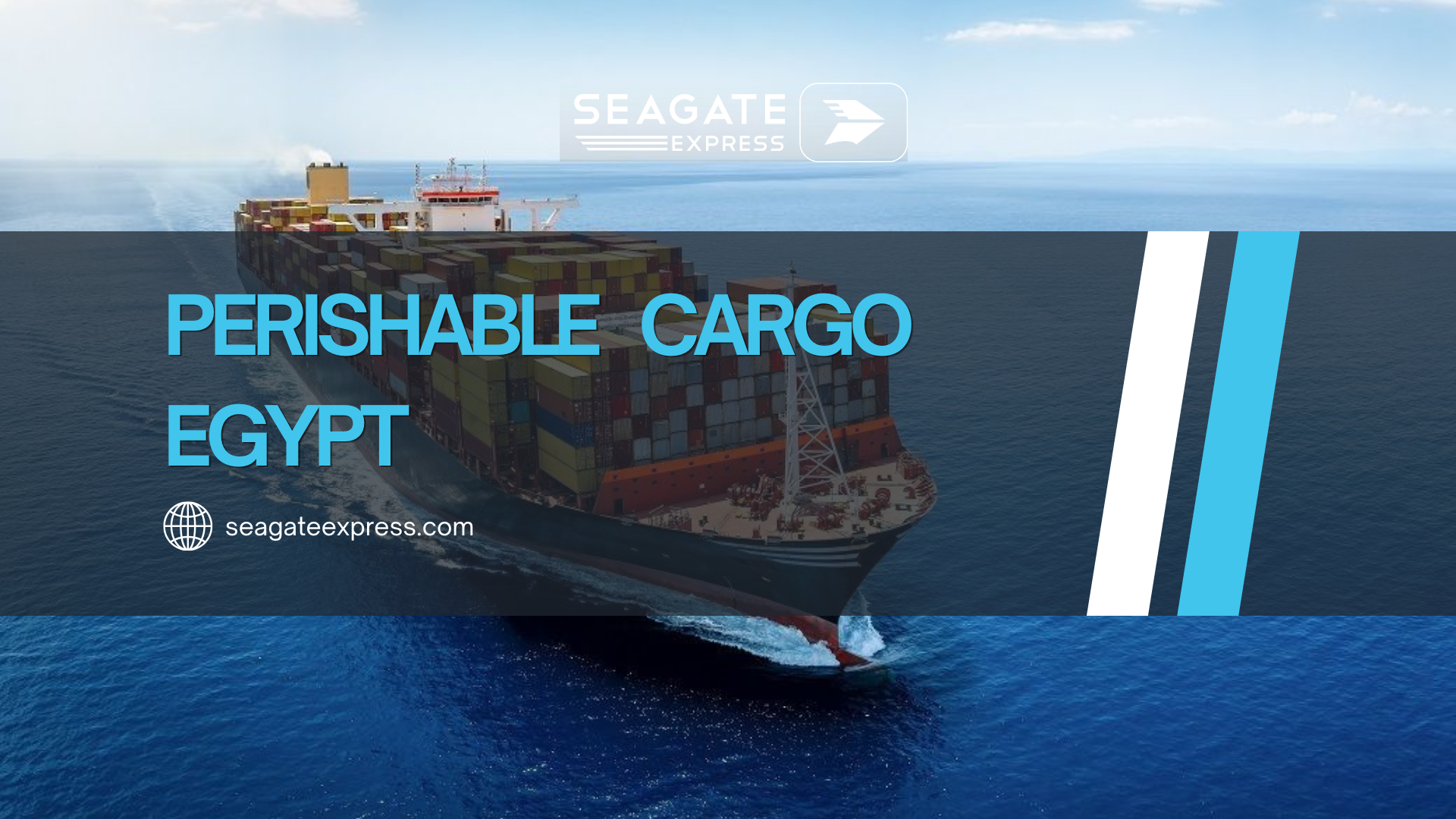
Perishable cargo shipping in Egypt is one of the most demanding parts of the country’s logistics sector, covering everything from fresh citrus exports to pharmaceutical shipments that spoil within hours of temperature failure. Egypt’s position as a major exporter of fruits, vegetables, and seafood makes cargo shipping Egypt operations for perishables a critical part of the national supply chain. This guide explains what perishable cargo actually means, how it differs from non-perishable freight, the regulations that govern it in Egypt, and how to choose the right cargo freight services for time-sensitive shipments.
What Is Perishable Cargo?
Perishable cargo refers to goods that degrade, spoil, or lose commercial value within a limited timeframe unless stored and transported under controlled conditions. This category includes fresh produce, dairy, meat, seafood, flowers, and certain pharmaceuticals that require consistent temperature, humidity, or atmospheric control throughout the journey.
In the context of cargo in Egypt, perishable shipments are particularly significant because Egypt ranks among the top global exporters of citrus fruits, potatoes, and strawberries. Any delay or temperature fluctuation during transit can result in total loss of the shipment’s value, which is why perishable cargo services in Egypt are built around speed, monitoring, and strict handling protocols rather than standard freight procedures.

What Is Non-Perishable Cargo?
Non-perishable cargo is freight that does not degrade over time and does not require temperature control, humidity regulation, or expedited handling to retain its value. Examples include textiles, machinery, electronics, construction materials, and packaged dry goods.
The distinction matters operationally because non-perishable cargo shipping companies in Egypt can use standard containers, slower consolidation methods, and flexible scheduling — none of which are acceptable for perishable freight. Most egyptian cargo companies maintain separate fleets, warehouses, and documentation processes for the two categories because mixing them under one operational standard increases the risk of spoilage and customer disputes.
Request a Freight Consultation
What Are the Perishable Cargo Regulations in Egypt?
Perishable cargo regulations in Egypt are governed primarily by the Egyptian Ministry of Agriculture, the General Authority for Export and Import Control (GOEIC), and international phytosanitary standards required by destination countries. Every perishable export needs a phytosanitary certificate, a health certificate where applicable, and compliance with the cold chain standards specified by the importing nation.
For freight in Egypt involving perishables, customs clearance timing is the single biggest regulatory risk. Unlike standard freight, perishable shipments cannot sit in port awaiting inspection without risking spoilage, which is why experienced freight forwarders in Egypt pre-clear documentation before the shipment physically arrives at the port whenever the process allows it. Working with a customs clearance agent who specializes in perishable goods is not optional in this category — it directly determines whether the cargo survives the clearance window in usable condition.
What Are the 4 Main Types of Perishable Goods?
The four main categories of perishable goods are fresh produce, dairy and meat products, seafood, and pharmaceuticals or biologicals. Each category has different temperature, humidity, and handling requirements that affect how it must be packed and transported.
- Fresh produce (fruits, vegetables, flowers) typically requires temperatures between 0–13°C depending on the commodity, and is Egypt’s largest perishable export category.
- Dairy and meat products require strict cold chain control, usually between -18°C and 4°C, with zero tolerance for temperature breaks.
- Seafood requires either frozen (-18°C or below) or fresh-chilled conditions with very tight transit windows.
- Pharmaceuticals and biologicals often require the most precise control, sometimes within a 2–8°C range with continuous monitoring and documentation for regulatory compliance.
Understanding which category a shipment falls into determines the equipment, route, and cargo services Egypt providers will recommend before booking.
What Type of Container Is Used for Perishable Cargo?
Perishable cargo is primarily shipped in refrigerated containers, known as reefer containers, which maintain a consistent internal temperature through an integrated cooling unit powered either by the vessel, a generator set, or port electricity. Reefer containers come in standard 20ft and 40ft sizes and can typically maintain temperatures from -30°C to +30°C depending on the unit.
For air shipments, perishable goods are usually transported in insulated unit load devices (ULDs) or temperature-controlled containers loaded into the aircraft’s climate-controlled hold. Businesses moving smaller or higher-value perishable shipments often choose air freight specifically because it shortens transit time enough to reduce dependency on extended refrigeration, which matters most for highly sensitive products like fresh seafood or flowers.
What Is a Perishable Truck?
A perishable truck, also called a refrigerated truck or reefer truck, is a vehicle equipped with an insulated cargo body and a mechanical refrigeration unit that maintains a controlled temperature during road transport. These trucks are essential for the inland leg of a perishable shipment’s journey — moving goods from farms or processing facilities to ports, airports, or final destinations.
In Egypt, perishable trucks are particularly important for routes connecting agricultural regions in the Nile Delta and Upper Egypt to export hubs like Alexandria, Damietta, and Cairo. Any overland freight company handling perishables must maintain calibrated, monitored refrigeration units, since even a short delay without active cooling can compromise an entire shipment before it reaches the port.

Request a Freight Consultation
What Does Perishable Mean in Logistics?
In logistics, perishable means any cargo whose physical or commercial condition deteriorates over time due to factors like temperature, humidity, oxygen exposure, or mechanical handling, requiring specialized equipment and expedited processes to preserve its value. This definition extends beyond food to include certain chemicals, live animals, and time-sensitive documents or biological samples.
Logistics providers treat perishable cargo differently across every stage: booking priority, route planning, customs sequencing, and insurance. Cargo shipping Egypt operators serving the perishable segment typically build their entire operational model — staffing, equipment, and partnerships — around minimizing the time a shipment spends outside a controlled environment.
How to Choose the Right Provider for Perishable Cargo in Egypt
Choosing the right provider for perishable cargo in Egypt depends on three factors: proven cold chain infrastructure, fast customs clearance capability, and transparent real-time tracking. Without all three, the risk of spoilage and financial loss increases significantly regardless of how competitive the pricing looks on paper.
When comparing cargo shipping companies in Egypt, ask specifically about their reefer container availability, their relationships with port authorities for priority clearance, and whether they offer marine insurance coverage suited to perishable goods, since standard cargo insurance often excludes spoilage-related claims. A provider experienced in ocean freight and air freight for perishables should be able to explain transit time trade-offs clearly rather than defaulting to whichever mode is more profitable for them.
It’s also worth noting that other companies primarily focus on parcel and express logistics rather than bulk perishable export logistics — for large-volume agricultural or seafood exports, specialized freight forwarders with dedicated cold chain experience are generally a better fit than general courier networks.
FAQ
What is the difference between perishable and semi-perishable cargo?
Perishable cargo spoils quickly without temperature control, typically within days, while semi-perishable cargo has a longer shelf life and more tolerance for minor temperature fluctuations, such as certain canned or vacuum-sealed goods.
How long can perishable cargo stay in a reefer container?
This depends on the product, but most fresh produce can remain viable in a properly functioning reefer container for 14 to 30 days, while seafood and dairy typically have shorter safe windows of a few days to two weeks.
Does perishable cargo need special insurance?
Yes, perishable cargo typically needs insurance that specifically covers spoilage and temperature-related loss, since standard marine cargo insurance often excludes these risks unless added as a specific clause.
What documents are required to export perishable goods from Egypt?
Exporters generally need a phytosanitary certificate, a commercial invoice, a packing list, a certificate of origin, and sometimes a health certificate depending on the destination country’s import requirements.
Is air freight always better than sea freight for perishables?
Not always — air freight is faster and reduces spoilage risk for high-value or highly sensitive goods, but sea freight in reefer containers is more cost-effective for large volumes of produce with a longer shelf life, like citrus or potatoes.
Which Egyptian ports handle the most perishable cargo exports?
Alexandria Port and Damietta Port handle the largest share of Egypt’s perishable agricultural exports, supported by dedicated cold storage facilities near both locations.