Exporting food from Egypt requires two layers of paperwork: exporter-level registrations that you complete once (such as your exporters' register and NFSA approval for your facility), and shipment-level documents issued for every consignment (commercial invoice, packing list, health certificate, phytosanitary or veterinary certificate, and certificate of origin). Most delays at Egyptian ports come from shipment-level …

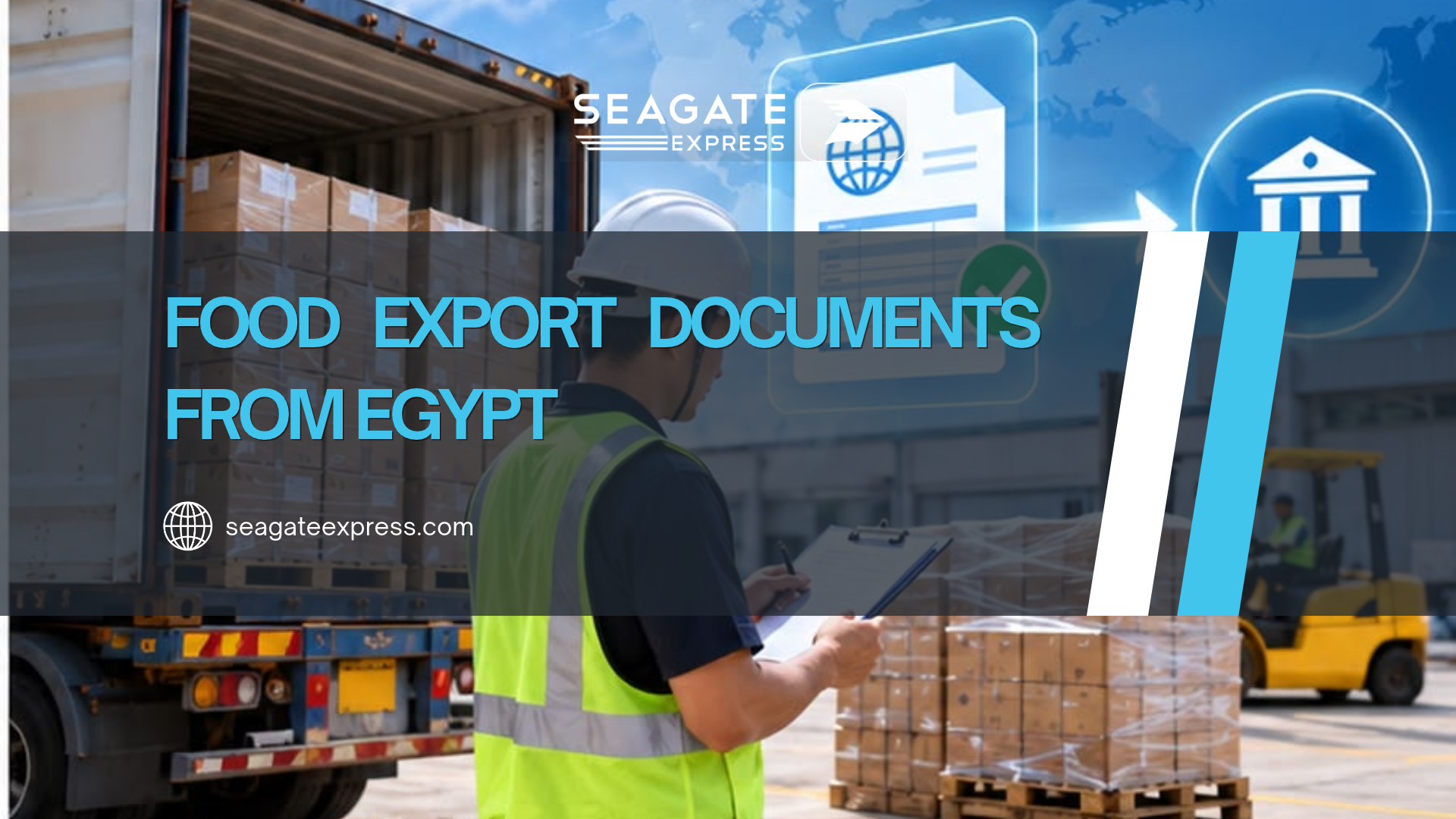
Exporting food from Egypt requires two layers of paperwork: exporter-level registrations that you complete once (such as your exporters’ register and NFSA approval for your facility), and shipment-level documents issued for every consignment (commercial invoice, packing list, health certificate, phytosanitary or veterinary certificate, and certificate of origin). Most delays at Egyptian ports come from shipment-level documents that are incomplete or that don’t match each other.
This guide lists each document, who issues it, and the mistakes that most often hold up food shipments.
Not sure which certificates your product needs for your destination? Seagate Express’s clearance team can review your document set before the container is stuffed.Check My Documents →
Exporter-Level Registrations
Exporters’ Register
Companies exporting from Egypt must be listed in the exporters’ register with the relevant authority under the Ministry of Trade and Industry. This is a one-time registration that needs to be kept current.
NFSA Approval
The National Food Safety Authority (NFSA) oversees the safety of food produced in and exported from Egypt. Food factories, packhouses and cold stores that export must be registered and approved by NFSA, and many destinations only accept product from facilities on an approved list. Your NFSA status should be confirmed before you sign a contract with a new buyer.
Destination-Market Listings
Some markets require the exporting facility to be listed in their own systems. The EU, for example, checks that products of animal origin come from approved establishments, and some Gulf and Asian markets require facility registration before the first shipment. Your buyer or importer should confirm this early.
Request a Freight Consultation
Shipment-Level Documents
| Document | Issued by | Needed for |
|---|---|---|
| Commercial invoice | Exporter | All shipments |
| Packing list | Exporter | All shipments |
| Health certificate | NFSA | Processed and frozen foods, most food exports |
| Phytosanitary certificate | Central Administration of Plant Quarantine (Ministry of Agriculture) | Fresh fruit, vegetables and many plant-based products |
| Veterinary health certificate | Veterinary authority | Products of animal origin |
| Certificate of origin | Chamber of Commerce | All shipments; also used for duty preference |
| EUR.1 movement certificate | Egyptian customs / authorized body | EU shipments claiming reduced duties |
| Bill of lading or air waybill | Carrier or forwarder | All shipments |
| Lab analysis report | Accredited lab | When required by the buyer or destination (for example pesticide residues) |
Certificates of Origin and Trade Agreements
The right certificate of origin can cut the duty your buyer pays, which makes your product more competitive. Egypt’s main agreements for food exports include:
- EU–Egypt Association Agreement: uses the EUR.1 certificate or an origin declaration
- Greater Arab Free Trade Area (GAFTA): for most Arab markets, including the Gulf
- COMESA and AfCFTA: for many African markets
- Agadir Agreement: with Jordan, Morocco and Tunisia
Ask your buyer which certificate they need before shipping. Issuing the wrong form means the buyer pays full duty or waits for a replacement.
Documents by Product Type
Frozen Vegetables and Fruit
NFSA health certificate, certificate of origin and, for some destinations, a phytosanitary certificate. See our guide to exporting frozen food from Egypt.
Fresh Produce
The phytosanitary certificate is central here, and some markets add special protocols such as cold treatment or pre-shipment inspection. Our article on exporting fresh produce from Egypt covers the fresh side.
Processed and Packaged Food
The NFSA health certificate and correct labeling in the destination’s language matter most. Some buyers also need lab reports or halal certification.
Mistakes That Delay Food Shipments
- Mismatched details: the product description, weight or HS code differ between the invoice, packing list and certificates.
- Wrong consignee: the consignee on the health certificate doesn’t match the bill of lading.
- Late inspection booking: the container waits at the port, paying plug-in and storage charges, until the inspector arrives.
- Expired facility approval: NFSA or destination listing has lapsed.
- Labels that don’t meet destination rules: this is caught at arrival, when it is most expensive to fix.
For the full customs side of the process, see our list of documents required for customs clearance in Egypt.
Request a Freight Consultation
Frequently Asked Questions
Who issues health certificates for food exports in Egypt?
The National Food Safety Authority (NFSA) issues health certificates for most food exports after inspecting and, when needed, sampling the shipment.
Do I need a phytosanitary certificate for frozen vegetables?
It depends on the destination. Many markets require it only for fresh produce, but some also ask for it on frozen plant products. Confirm with your buyer before shipping.
What is a EUR.1 certificate?
EUR.1 is a movement certificate that proves Egyptian origin, so EU buyers can pay reduced or zero duty under the EU–Egypt Association Agreement.
Can a freight forwarder prepare food export documents?
A forwarder with a customs clearance team can prepare and file most documents and coordinate inspections, but certificates themselves are issued by the relevant authorities.
Seagate Express’s customs clearance service prepares and checks food export documents and coordinates NFSA and quarantine inspections at Egyptian ports, alongside our perishable logistics service.