Last-mile delivery is usually the shortest leg of a shipment's journey and the most expensive, most visible, and most likely to go wrong. In Egypt, that final stretch from a warehouse or hub to the customer's door carries a distinct set of obstacles that don't show up the same way in Europe or the Gulf. …

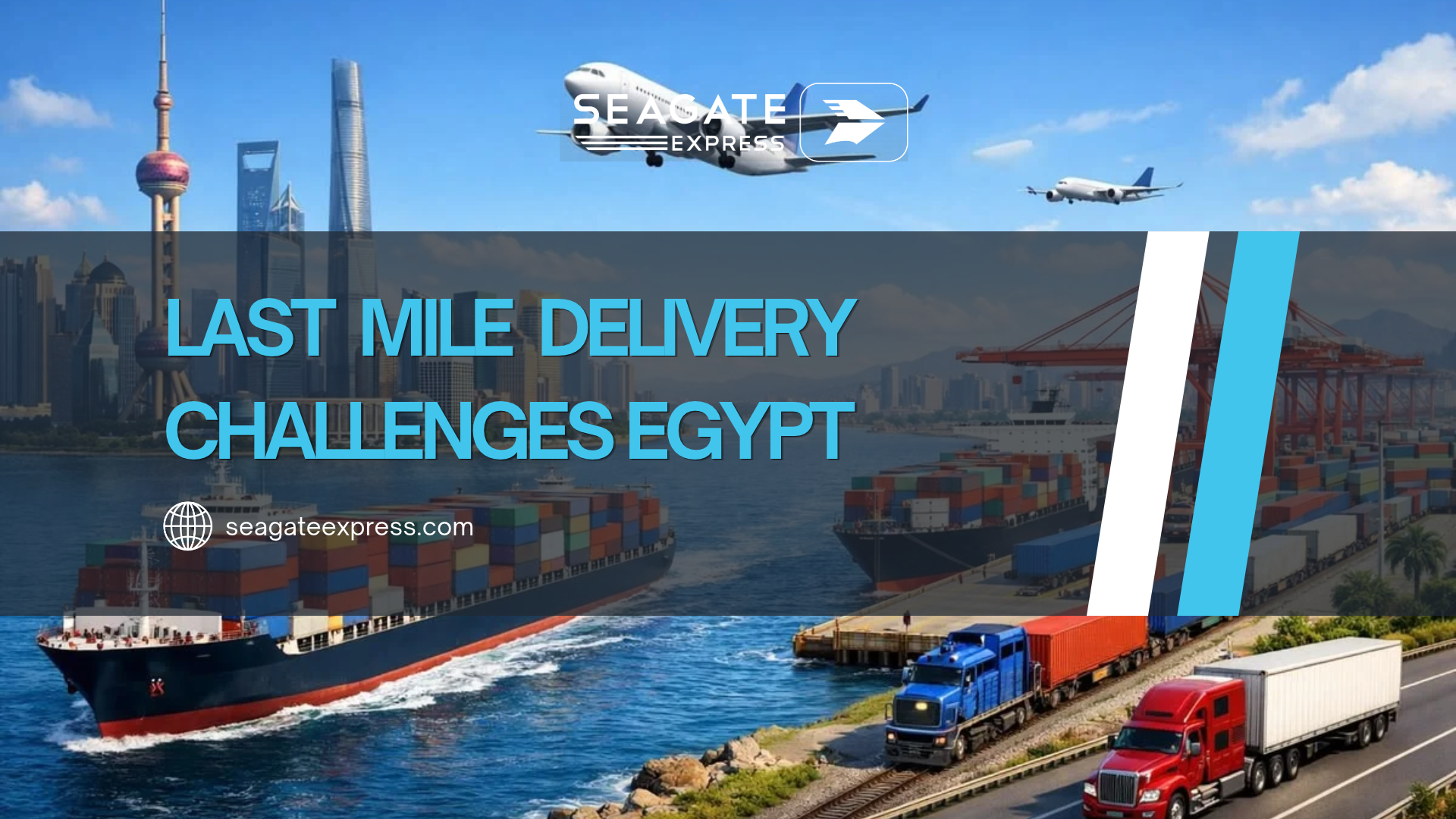
Last-mile delivery is usually the shortest leg of a shipment’s journey and the most expensive, most visible, and most likely to go wrong. In Egypt, that final stretch from a warehouse or hub to the customer’s door carries a distinct set of obstacles that don’t show up the same way in Europe or the Gulf. For B2B distributors and e-commerce brands shipping into or across the Egyptian market, understanding those obstacles is the first step toward fixing them.
This article breaks down what last-mile delivery actually looks like in Egypt today, the specific problems that slow it down, and the practical steps logistics teams are using to solve them.
What Does Last-Mile Delivery Mean in Egypt’s B2B and E-commerce Context?
Last-mile delivery is the final movement of goods from a distribution point, warehouse, or fulfillment center to the end customer’s location. In Egypt, it typically means the leg between a hub in Cairo, Alexandria, or another major city and a home, office, or retail address anywhere in the country.
For B2B importers, this stage matters just as much as international freight. A shipment can clear customs smoothly and still arrive late or damaged if the domestic distribution leg is poorly planned. For e-commerce sellers and distributors, last-mile delivery is often the single biggest driver of customer satisfaction and repeat orders and, according to industry surveys on Middle East e-commerce operations, inefficient last-mile delivery is cited by a large share of regional companies as their primary growth obstacle. Getting this leg right requires the same planning discipline applied to broader logistics operations in Egypt, not an afterthought bolted onto the end of a supply chain.
Why Address Standardization Is One of Egypt’s Biggest Last-Mile Problems
Egypt does not yet have a nationwide, standardized addressing system comparable to those used in Western Europe or the Gulf, so many deliveries rely on landmarks, informal area names, and driver knowledge rather than precise addresses. This makes route planning harder and increases the chance of failed or delayed deliveries.
Addresses in many Egyptian neighborhoods mix building descriptions (“next to the pharmacy,” “behind the mosque”), duplicated street numbers, and informal district names that don’t match official records. Standard geocoding tools built around Western address formats often struggle to match these entries accurately. The government has started work on a national addressing initiative using GIS mapping and digital identifiers for buildings, but rollout has been slow and uneven across governorates. Until a standardized system is fully in place, carriers and fulfillment teams have to compensate with local knowledge, phone confirmation calls, and driver familiarity with specific zones which is one reason working with transportation companies in Egypt that already operate in a given area matters more than picking the lowest-cost carrier on paper.

Request a Freight Consultation
How Much Does Traffic Congestion Slow Down Deliveries in Egypt?
Traffic congestion in Cairo and other major Egyptian cities significantly increases delivery times and fuel costs, and it makes precise delivery windows difficult to guarantee. Peak-hour trips can take twice as long as normal, which directly affects how many stops a driver can complete per day.
A World Bank study on Cairo traffic congestion estimated the annual economic cost at roughly EGP 50 billion (about $8 billion), equivalent to as much as 4% of Egypt’s GDP four times the typical congestion cost estimate for comparable large cities. The same study found that average speeds on major corridors during peak periods can drop to 15–40 km/h, well below the 60–80 km/h normally expected. For last-mile fleets, that means fewer completed drops per shift, higher fuel and maintenance costs, and less predictable delivery windows for customers. This is compounded outside Cairo and Alexandria too, where road quality and traffic patterns vary widely between the Delta, Upper Egypt, and coastal cities, making route planning a city-by-city exercise rather than a one-size-fits-all model.
Why Cash-on-Delivery Complicates Last-Mile Logistics in Egypt
Cash-on-delivery (COD) remains the dominant payment method for Egyptian e-commerce, and it adds operational steps that pure prepaid delivery models don’t have: cash handling, reconciliation, and a much higher risk of failed or refused deliveries. This makes COD orders more expensive and slower to process than card or wallet payments.
Estimates vary by source and product category, but market research from firms such as Mordor Intelligence places COD’s share of Egyptian e-commerce transactions somewhere between 45% and 85%, with it consistently cited as the preferred payment method for the majority of online shoppers, especially outside Cairo and Alexandria. The reasons are structural: limited trust in online payment security, uneven access to banking services, and a cash-based economy overall. Operationally, COD means drivers carry and reconcile cash at the end of each route, merchants wait longer for funds to clear, and refusal-at-the-door rates run higher than prepaid orders. Handling this reliably requires the kind of disciplined cash reconciliation and risk controls covered under cargo and shipment risk management, applied specifically to the last-mile leg rather than just international cargo.
What Are the Coverage Gaps in Rural and Last-Kilometer Delivery?
Delivery infrastructure in Egypt is concentrated around Cairo, Alexandria, and a handful of secondary cities, which leaves rural areas, informal settlements, and remote governorates with thinner carrier coverage, longer transit times, and fewer delivery attempts per week. Reaching these areas often requires local partners rather than a single national network.
This coverage gap matters more than it might seem for B2B shippers: distributors selling into Upper Egypt, the Delta’s smaller towns, or Red Sea and Sinai communities often find that national carriers subcontract the final stretch to local couriers, adding time and reducing visibility. The practical fix is positioning inventory closer to demand rather than shipping every order from a single central hub. Distribution and storage services placed strategically near regional demand centers shorten the last-mile distance itself, which reduces both transit time and the number of handoffs between carriers.
How Do Failed Deliveries and Return Rates Affect Egyptian Shippers?
Failed first-attempt deliveries and returns are a measurable cost center in Egypt’s last-mile market, driven mainly by COD refusals, address errors, and customers who are unreachable at the scheduled time. Even a delivery network with a strong success rate still generates a meaningful volume of reattempts.
Ken Research’s analysis of Egypt’s digital logistics and last-mile delivery market puts return-to-origin (RTO) rates for COD orders at roughly 15–25%, and even networks reporting first-attempt success rates near 89% are still failing to deliver on the first try for about 1 in 9 parcels. Each reattempt consumes rider time and vehicle capacity without guaranteeing the merchant any additional revenue, and it pushes delivery costs already among the higher end for the region, with per-package costs frequently cited around $5 even higher relative to order value. Reducing this starts upstream: order confirmation calls before dispatch, accurate address capture at checkout, and realistic delivery windows communicated to the customer all cut down on wasted attempts before a driver ever leaves the warehouse.
Why Is Carrier Fragmentation a Recurring Problem for Egyptian E-commerce?
No single carrier in Egypt currently offers complete, reliably fast coverage across every governorate and delivery channel, so most brands and distributors end up integrating with multiple regional and national carriers to balance cost, speed, and geographic reach. Managing that mix without a coordinating partner creates its own overhead.
Fragmentation shows up as inconsistent tracking formats between carriers, different COD reconciliation cycles, and uneven service quality between urban and rural routes. For a growing e-commerce brand or B2B distributor, manually managing five or six carrier relationships eats into the time that should go toward sales and product. This is exactly the gap that third-party logistics providers in Egypt are built to close consolidating carrier management, tracking, and reporting under one operational relationship instead of several.
How Can Businesses Solve Last-Mile Delivery Challenges in Egypt?
Solving last-mile delivery challenges in Egypt comes down to four practical moves: positioning inventory closer to customers, using route and dispatch technology instead of manual planning, building COD reconciliation into daily operations, and choosing a carrier mix matched to each region rather than a single national contract.
Work With a Partner That Has Distribution Near Demand Centers
Shortening the physical last-mile distance is the single biggest lever available. A logistics partner with warehousing and distribution capacity positioned near Cairo, Alexandria, and secondary demand hubs can cut transit times and reduce the number of carrier handoffs per order, which lowers both cost and failure rates.
Use Route Optimization and Real-Time Tracking
Static, pre-planned routes don’t hold up against Cairo’s traffic variability. Dispatch systems that recalculate routes based on live conditions, combined with real-time tracking that lets both the merchant and the customer see where a shipment is, reduce missed delivery windows and cut down on the “where is my order” support volume that eats into operational time.
Build COD Reconciliation Into the Process, Not Around It
Since cash-on-delivery isn’t going away in the near term, the fix is process discipline: order confirmation calls before dispatch, daily cash reconciliation against delivered orders, and clear escalation for repeated refusals at a given address. Treating COD handling as a core part of route planning rather than an afterthought reduces both fraud risk and reconciliation delays.
Choose the Right Carrier Mix Instead of One National Contract
Different regions of Egypt call for different carrier strengths a courier strong in Cairo’s dense urban zones may be weak in Upper Egypt, and vice versa. Rather than forcing one contract to cover the whole country, matching carriers to regions and consolidating oversight under a single logistics partner solves both the coverage problem and the fragmentation problem at once. For a deeper look at evaluating and selecting that kind of partner, see this guide on how to choose a 3PL fulfillment partner for e-commerce in Egypt.
Request a Freight Consultation
Getting Last-Mile Delivery Right in Egypt
Last-mile delivery in Egypt isn’t a solved problem, but it is a manageable one once the specific causes informal addressing, urban congestion, heavy COD reliance, rural coverage gaps, and carrier fragmentation are treated as separate issues with separate fixes rather than one generic “shipping is slow” complaint. Businesses that plan around these realities, rather than importing a delivery model built for a different market, see fewer failed drops and lower cost per order over time.
Seagate Express works with importers, distributors, and e-commerce brands on the logistics infrastructure behind reliable domestic distribution in Egypt, from warehousing placement to carrier coordination, so the last mile stops being the weakest link in the supply chain.